
Mindful spaces: Instead of stimulating, neuroarchitecture regulates, The Vancouver Sun, January 2026
This article was written by Lise Boullard and originally published in the Vancouver Sun.
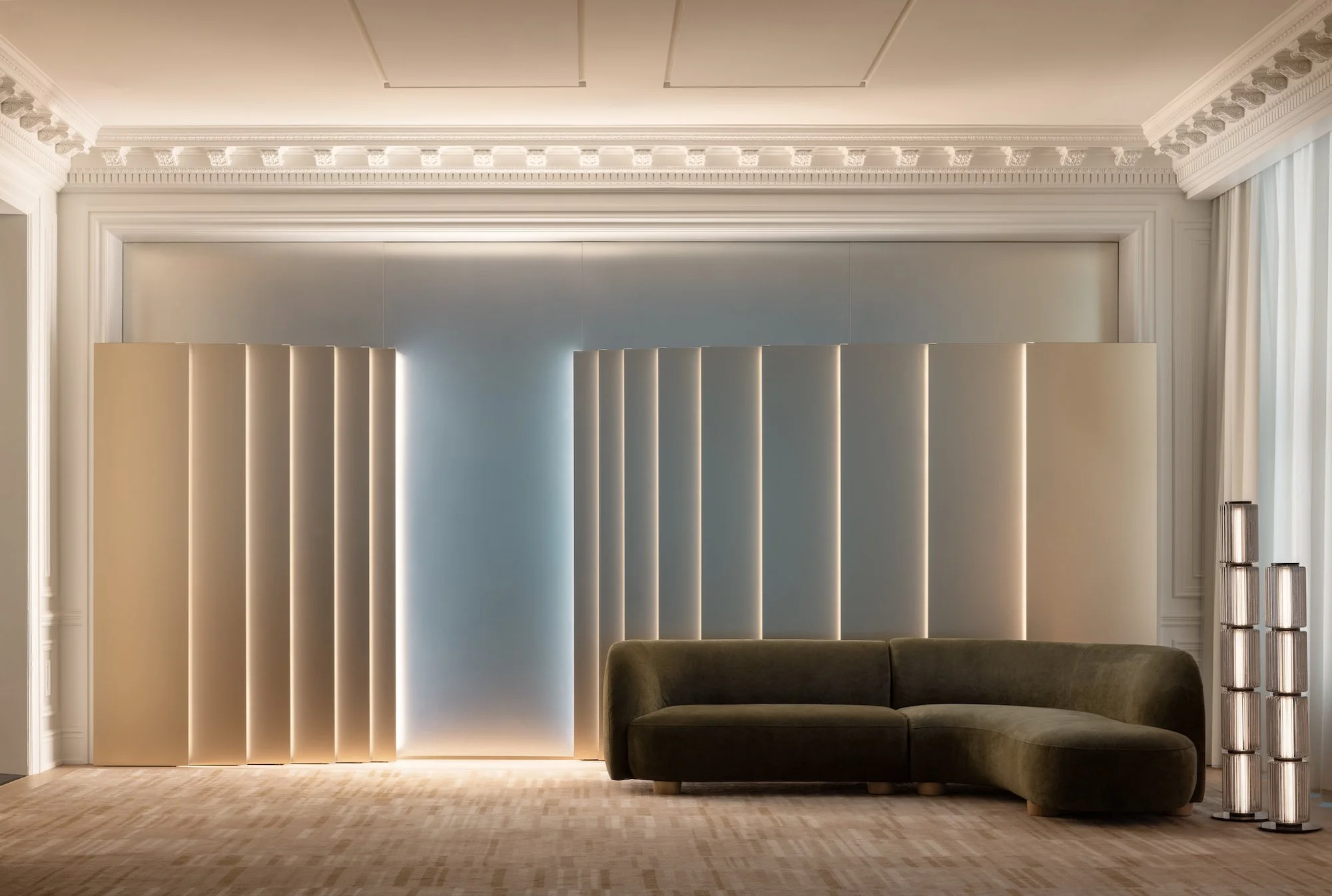
With anxiety, ADHD and other neurodivergent diagnoses on the rise, the world’s leading design firms are using a sensory-led approach to create homes and workspaces that heal.
Fluorescent lights, the near-constant grinding of an industrial espresso machine, and chilly coffee shop temperatures … To many remote coffee shop workers, these are fast-forgotten annoyances while typing away on their laptops. But for Vancouver resident Maryam Mobini, who has ADHD and is among millions of neurodivergent people worldwide, experiences like these can leave her so depleted she has to go home and lie down in a dark room to recuperate. And don’t mention the impact on work productivity.
Mobini, a sensory and behaviour designer who has contributed to anxiety and chronic pain research at SFU, and trained under behaviour scientist Dr. BJ Fogg and psychiatrist Dr. Daniel Amen, is one of a growing number of neuro-informed designers.
Drawing on research in the field and her lived experiences, Mobini explores how environments — workplace, home, public spaces — impact emotions, thoughts and behaviour. Instead of asking people to rely on constant self-control, discipline, or coping, Mobini’s design philosophy puts the onus on the space itself. “The environment is always on, influencing us every minute we’re in it, whether we’re aware of it or not,” she explains.
This pre-function area at The St. Regis Toronto, designed by Mason Studio and completed in 2025, features contrasting warm and cool light to draw the eye and indicate a point of gathering and pause for guests. Photo by Brandon Barre
Through her company, the innovation and design studio to:Resonate, Mobini consults with architects and interaction designers, and works one-on-one with clients in Canada, the US and Europe. Many of her clients are highly successful but struggle with ADHD and other neurodivergent conditions. Working with the likes of Lululemon, Procter & Gamble and Thrive Global, Mobini designs sensory-informed workplaces, wellness spaces, residential homes, and public installations. By incorporating finely tuned acoustics, LED lighting and intuitive layouts, Mobini taps into frequency, light, colour, and sound to “support [nervous system] regulation rather than stimulation.”
And with “nervous system regulation” becoming somewhat of a buzzword — in 2024 the hashtag had garnered over hundreds of million views on TikTok — it’s a design consideration more and more firms are building into their ethos. “Sensory overload, attention fragmentation, and burnout are becoming mainstream,” says Mobini.
Neuroarchitecture as a field first emerged in the early 2000s when neuroscientists such as Fred Gage at the Salk Institute in La Jolla, California — a centre founded in 1965 dedicated to studying how the environment influences the brain — began exploring the link between architecture and neuroplasticity. Today, researchers around the world are building on this work with initiatives such as the International Centre for Neuroarchitecture and NeuroDesign, a partnership between the Research Institute of Sweden and the University College of London which aims to explore how to make built environments more inclusive.
Here in Canada, design firms such as Mason Studio in Toronto are leading the way with sensory-informed residential and commercial projects. Stanley Sun, co-founder and creative director says one of the core principles of neuroarchitecture is the focus on function as opposed to only esthetics. “[In neuro-informed design,] materials are chosen not only for appearance but for how they perform. Textiles that absorb sound reduce mental fatigue. Surfaces with natural variation are easier for the eye and nervous system to process. Even small decisions, such as flooring transitions or door placement, influence how people move and feel at home.”
Mason Studio’s team also applies lighting strategies that calibrate to support circadian rhythms — brighter, cooler tones for morning and warmer, more diffused light for evening wind-down — for instance, which help improve sleep and energy. In a bedroom at Jing’an Residences townhouse project in Shanghai, Mason Studio’s team applied a continuous marble band along the lower part of the wall around the bed to create a sense of enclosure and security, and directed lighting upwards to create a feeling of warmth and comfort.
When considering layout, Stanley’s team aims for clear sightlines. For example, when designing a corridor at the Jing’an Residences, the team aimed to support intuitive movement throughout the space, helping reduce micro-decisions. They also added quiet zones, away from high-activity areas. “Each tactical choice works together to create a home that supports calm, clarity, and comfort without the resident having to think about it,” Sun explains.
While some may think these details are a luxury, Sun argues neuroarchitecture is an investment that will pay dividends. “In workplaces, the impact is measurable. Improved lighting and acoustic balance support concentration, reduce fatigue, and contribute to lower rates of mental health-related absenteeism.” He believes behavioural design has the potential to save time, energy, and emotional bandwidth across all aspects of life.
Mobini agrees: “When we design environments that support neurodivergent nervous systems, we create spaces that work better for everyone.”