
How Original Art Shapes a Homes, Vancouver Sun, September 2026
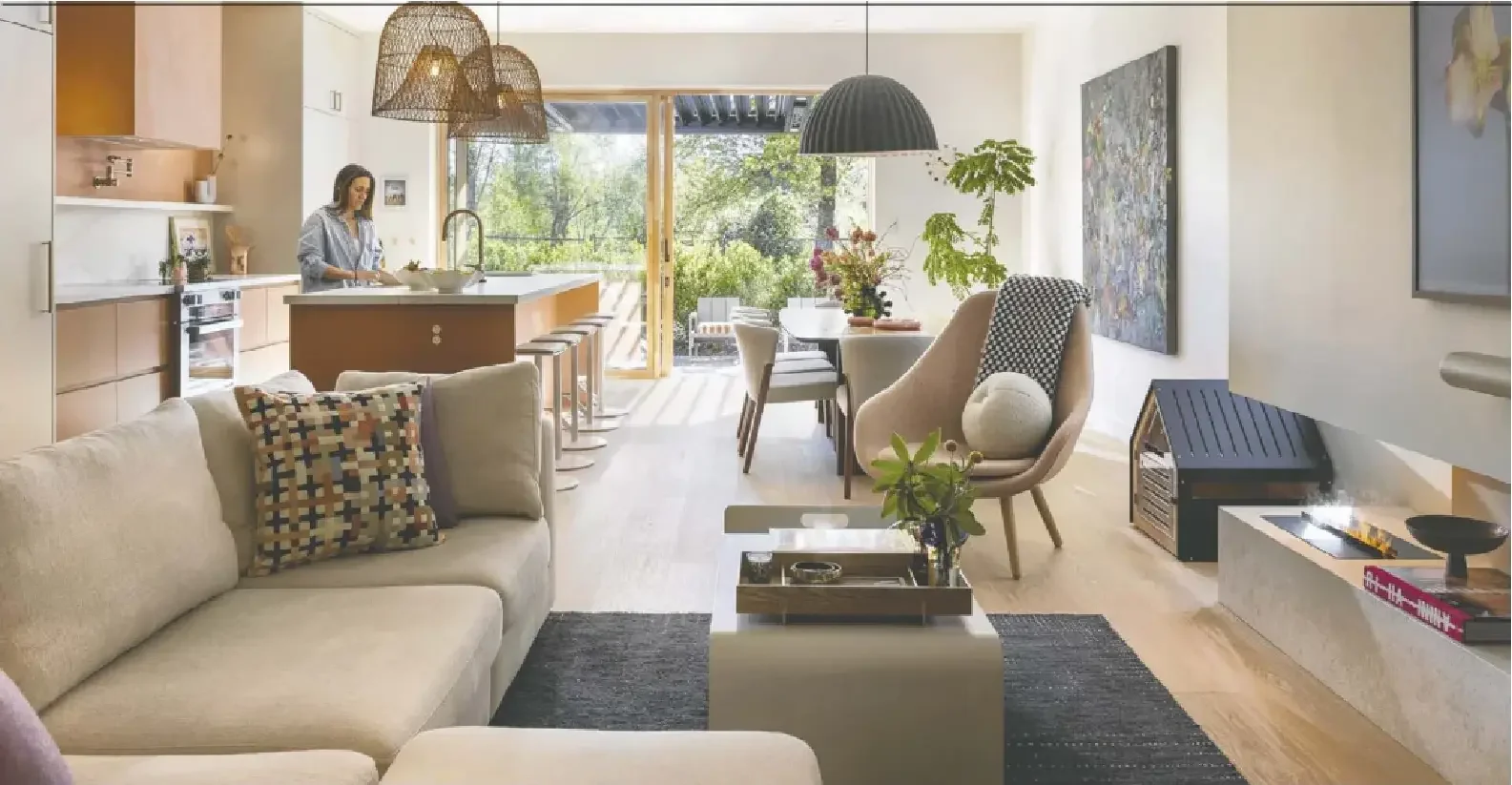
This article was written by Lise Boullard and published in The Vancouver Sun in September 2026. .
Throughout history, displaying original works within a space has been a form of documentation, storytelling, and personal expression. And now, when disposable and even artificial-intelligence decor options are in abundance, hanging human-made originals is becoming recognized as a sustainable design solution.
Deanna Geisheimer, art consultant and president of Vancouver's Art Works Gallery, has helped clients source pieces for their spaces for 46 years. She says she has witnessed how interest in collecting has ebbed and flowed with the economy.
“I've seen people spend $30,000 on a couch and then they put up a $500 print. That couch in five, 10, 15 years is either going to be recovered or replaced because it's out of style. But the artwork, if it's selected well, will last you a lifetime,” she explains.
While works by established artists have long been viewed as an appreciating financial asset, Geisheimer has seen her clients invest in paintings for the “joy dividends” they will pay over the years. She cites a customer who gave up their annual vacation, instead opting for a painting they knew would make them happy every time they glanced at it. And art exposure can bolster your physical health, too, with studies showing art appreciation can lower blood pressure.
When it comes to sourcing pieces for the interior design projects on which Geisheimer consults, pulling from local artists is also a decidedly sustainable decor choice. Recently, she worked with interior design firm Form Collective on the art selection for Canada's first certified zero-carbon home, Phoenix House. Located in Abbotsford, the five-bed, five-bath, 3,500-square-foot multi-generational residence was reconstructed after the original residence was destroyed in a fire, leaving only its foundation.
Josephina Serra, principal interior designer and partner at Form Collective, says Phoenix House is a leading-edge project designed to achieve International Living Future Institute Zero Carbon Certification. The first of its kind in Canada, it's caught the attention of BCIT and UBC, which conducted case studies on the house.
The residence, which features solar panels, heat pumps and a rainwater collection system, is also the first building in B.C. to use a spray-on membrane for the building envelope. Salvaged materials, triple-pane windows and high-performance Miele appliances also help to ensure every gigajoule is accounted for. “Everything from the pavers to the concrete was carbon considered. We worked
with an energy consultant who calculated everything we put into the home, from windows to walls to exterior cladding,” Serra explains. The result is a structure that, through energy modelling, is designed to achieve less than one-third of the energy the average Canadian residence uses annually.
It also provides an exciting sustainable building blueprint for future projects.
When it came to decorating and selecting the artwork for the home, the design team sourced local pieces from Art Works' collection, aligning with the home's sustainability mandate since the pieces were shipped locally. In the light-flooded, terracotta-hued dining room, the team opted for a dramatic 63-inch oil on canvas with bright layered florals by Gibsons-based artist Todd Clark. “That one piece on that huge wall really grounded that dining area and separated it from the living room,” Serra explains.
There have also been instances where a Form Collective client's own collections have informed a home's design. “We designed a kitchen wall for a beautiful painting of a brown bear for a client moving from Bowen Island to Coal Harbour, ” says Serra, who opted for walnut-panelled millwork and an art light, creating a light background to make the animal pop.
And then there's the case when a home inspires a new painting: “That same client hired an artist to do a commissioned piece of the view from his previous home for his entryway because he missed his old house and the view that it gave,” Serra explains.
For DIY decorators selecting pieces or renovating one part of home around a specific work, Geisheimer has a few tips. “Spend a little bit of money and make sure you've got the proper lighting, whether it's track lighting that you can position towards it, or a pot light that washes the wall properly,” she says.
And artwork should always be hung at eye level, the general rule being the centre of the piece should be about 60 inches from the floor, “with the exception of if you're going to be viewing it seated and it's going above a credenza,” she continues.
Geisheimer also says it's important to question the urge to hang a mirror, when a piece of art might be more appropriate. “Always think, `What are you reflecting back?'” she says, remembering an incident where a mirror was hung behind a dinner table, reflecting back the heads of diners.
For clients who have existing works they think are too dated for a more modern home, Geisheimer says the solution can be as simple as a classic, timeless frame that won't date itself, or refurbishing a piece that may look worn.
But besides the technical advice, Geisheimer says art selection is best done from the heart.
“Get a piece that speaks to you ... something that not only enhances your home, but causes you to think a bit more, interact a little more, see something different, or enjoy.”